

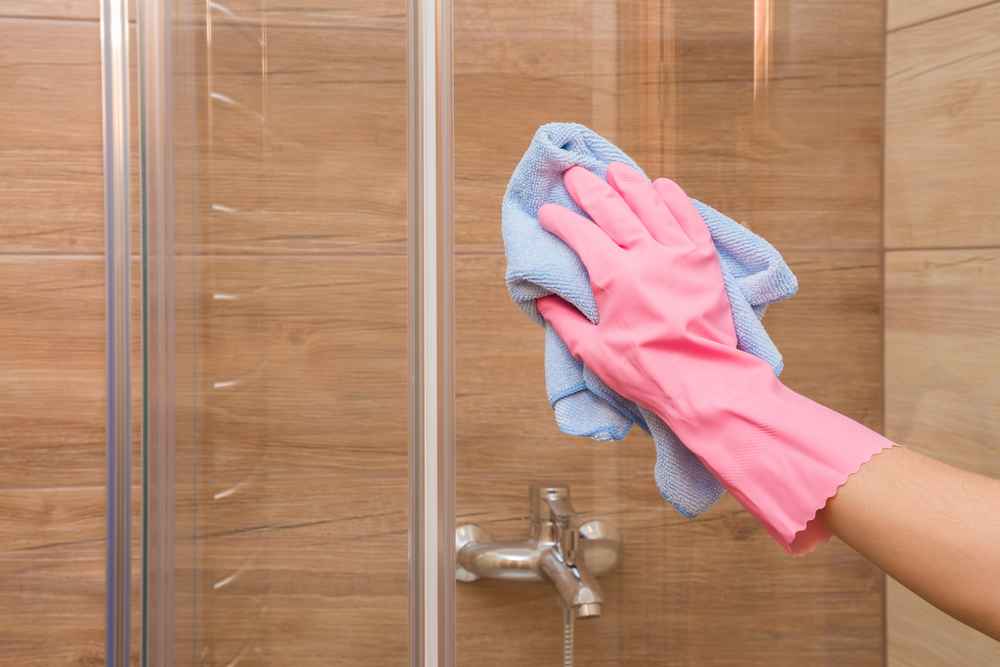
Most shower buildup comes down to two conditions: hard water chemistry and residual moisture left sitting on surfaces after each use. Soap scum, mineral deposits, and mold each form through different mechanisms, which means each requires a different removal approach. The methods below are organized by buildup type and surface so you can match the right cleaner to the problem rather than scrubbing harder with the wrong tool.
Why Soap Scum Forms (and Why Regular Rinsing Won’t Remove It)
Soap scum forms when fatty acids in bar soap react with calcium and magnesium ions in hard water, producing calcium stearate, an insoluble compound that bonds directly to glass and tile.
That last word is the key: insoluble. Plain water cannot dissolve calcium stearate. Rinsing the shower after every use slows the process but does not prevent buildup. The compound cures on the surface over time, hardening to a concrete-like consistency if it combines with mold or mildew. At that stage it also becomes a bacterial breeding ground, trapping organic matter inside a mineral matrix that standard cleaning sprays cannot penetrate.
Hard water accelerates every stage of this process. The higher the calcium and magnesium ion concentration in your water supply, the faster deposits accumulate. Removing calcium stearate requires an acid to dissolve the mineral bond or a mild abrasive to break the cured layer mechanically. You can read more about cleaning with vinegar and why its acidity is well-suited for this chemistry.
How to Remove Soap Scum from Shower Doors
The most effective removal method depends on how long the buildup has been curing. Acid-based solutions work on fresh-to-moderate deposits; abrasive pastes are better for older, thickened layers. Never use rough scouring pads on glass; they etch the surface permanently and make future cleaning harder.
Method 1: White Vinegar and Dish Soap
Fill a spray bottle with equal parts white vinegar and dish soap. Spray the doors and allow the mixture to sit until it dries. Acetic acid in the vinegar dissolves calcium stearate; the dish soap acts as a surfactant to carry the loosened residue away. Scrub with a soft cloth and rinse.
Method 2: Borax and Baking Soda Paste
Combine borax and baking soda into a paste. Both are mild abrasives safe for glass surfaces. Apply with a damp sponge, rub in circular motions to break the cured layer, and rinse with water. This method is most effective on thicker deposits where acids alone are not penetrating.
Method 3: Lemon Juice and Water
Mix 3 tablespoons of lemon juice per cup of water and spray onto glass. Wait five minutes and wipe with a sponge. Citric acid works on light-to-moderate buildup; this is the gentlest option and works best before scum has had time to harden. The trade-off for the milder scent is reduced effectiveness on older deposits.
Method 4: Ammonia and Water (1:3 ratio)
For heavy, long-standing buildup. Combine one part ammonia with three parts water in a spray bottle. Apply to problem areas, scrub while wet, then rinse thoroughly so all residue drains. Two non-negotiable safety rules: wear rubber gloves, and open windows and run ventilation before you start. Never mix ammonia with chlorine bleach. The reaction produces chloramine gas, which is toxic and can cause serious respiratory damage.
Best Glass Cleaners for Shower Doors (Including Homemade Options)
The goal here is different from soap scum removal. Streak-free glass cleaning targets calcium carbonate deposits left by evaporating water, not the fatty-acid mineral bonds of calcium stearate. The right cleaner applied with the right cloth handles both.
Baking Soda Paste
Mix half a cup of baking soda with half a cup of water into a thick paste. Apply with a microfiber cloth, then rinse off with white vinegar. The vinegar neutralizes the baking soda and simultaneously lifts mineral residue. Skip the vinegar step if using on tile grout.
Distilled White Vinegar (1:3 dilution)
Mix one part distilled white vinegar with three parts water. Spray onto glass, rinse with warm water, then wipe dry immediately with a microfiber cloth. The 5% acidity of standard white vinegar cuts through mineral deposits without damaging glass. Wiping dry before the rinse water evaporates is what prevents streaks.
Lemon Solution
Juice two to three lemons and mix with four tablespoons of distilled water in a spray bottle. Spray, wait five minutes, and wipe with a microfiber cloth. This can be used after every shower as a preventive step, not just as a reactive cleaner. The citric acid keeps mineral deposits from gaining a foothold.
Ammonia Solution (1:3 with water)
Spray onto glass, wait a few minutes, scrub with a brush, rinse, and dry immediately. Same safety precautions apply as above: ventilation open, gloves on, never combined with bleach.
Choosing a Commercial Cleaner
Three factors: active ingredient (ammonia for heavy deposits, oxygen bleach for regular maintenance), form (foam clings longer to vertical glass than liquid spray), and fume level (ammonia-based products require ventilation regardless of brand).
How to Deep Clean a Walk-in Shower (Step-by-Step)
The best time to deep clean a walk-in shower is immediately after use. Steam from a hot shower has already softened soap residue and mineral deposits, which cuts scrubbing effort by half.
Step 1: Remove everything from the shower.
Take out shampoo bottles, conditioner, soap bars, non-slip mats, and razors. Cleaning around them leaves buildup hidden underneath. An empty shower is a cleanable shower.
Step 2: Clean the walls before the floor.
Spray walls with a white vinegar solution or commercial cleaner and leave it for five minutes. For glass walls, spray white vinegar directly and wipe with a sponge. Clean walls first because debris falls downward during scrubbing.
Step 3: Clean the showerhead and fixtures.
Remove the showerhead and submerge it in a 50/50 water and white vinegar solution for two hours. Mineral buildup inside the spray holes dissolves on its own; reconnect after rinsing. Use a stiff toothbrush dipped in cleaning solution on the tap, handles, and knobs. Wipe dry with a microfiber cloth.
Step 4: Clean the drain.
Remove the drain cover and clear visible hair with a toothbrush. Pour equal parts baking soda and white vinegar down the drain. The carbon dioxide reaction loosens residue clinging to the walls. Let it sit ten minutes, then flush with hot water. For persistent blockage: plunger first, drain snake second. If neither works, call a plumber. For more detail, see how to unclog a shower drain safely.
Step 5: Clean the floor last.
Scrub tiles and grout with a brush and cleaning solution. Rinse the entire shower from top to bottom to carry all residue down the drain.
How to Prevent Soap Scum and Mold from Coming Back
Prevention is cheaper than removal. Once calcium stearate has cured to concrete-like hardness, you are spending far more effort than a daily habit would have required.
Squeegee or towel-dry glass after every shower. Mineral deposits form when water evaporates on a surface. Remove the water before it evaporates and you eliminate the deposit. A squeegee takes thirty seconds.
Use a daily shower spray. A diluted vinegar solution applied after squeegeeing keeps surface chemistry hostile to calcium stearate formation. Commercial daily shower sprays work on the same principle.
Switch from bar soap to liquid soap. Bar soaps contain stearic acid and palmitic acid, the fatty acids that react with calcium and magnesium to form calcium stearate. Liquid soaps are formulated with synthetic detergent (syndet) bases that do not contain these fatty acids, so the reaction that creates soap scum does not occur.
Apply car wax or shower door wax to glass. Both create a hydrophobic barrier that causes water to bead and roll off. Reapply every two to three months.
Install a water softener. A water softener replaces calcium and magnesium ions with sodium ions through an ion exchange process, eliminating the reactant that makes soap scum formation possible.
Ventilate properly. Run the bathroom exhaust fan during and for fifteen minutes after every shower. Open a window when available. Wipe the walls and floor with a dry cloth after each use. Mold requires sustained surface moisture; removing that moisture consistently cuts the condition off. For what happens when it is not managed, see how to prevent mold and mildew with professional cleaning.
When to Call a Professional Cleaning Service
Some shower conditions are beyond what DIY methods can reliably address. Four specific triggers indicate that professional cleaning is the right call.
Soap scum has hardened and DIY methods are not penetrating it. When calcium stearate has cured to concrete-like hardness and combined with mold, standard acids and abrasives may not be sufficient. Professional equipment reaches concentrations and contact times household products cannot match.
Grout has discolored and mold is embedded below the surface. Surface mold wipes away. Mold that has grown into porous grout requires professional treatment. Cosmetic cleaning does not solve it.
The showerhead remains clogged after two vinegar soaks. Two soaks is a reasonable DIY ceiling. Persistent blockage after that indicates heavy scale or a fixture that needs professional attention.
You need a verified deep clean for a property inspection or move-out. A professional clean creates a documented baseline that a thorough DIY clean does not.
If any of these conditions apply, our house cleaning service covers full bathroom deep cleans as part of both our one-time cleaning and recurring cleaning options. Contact us to schedule.
