
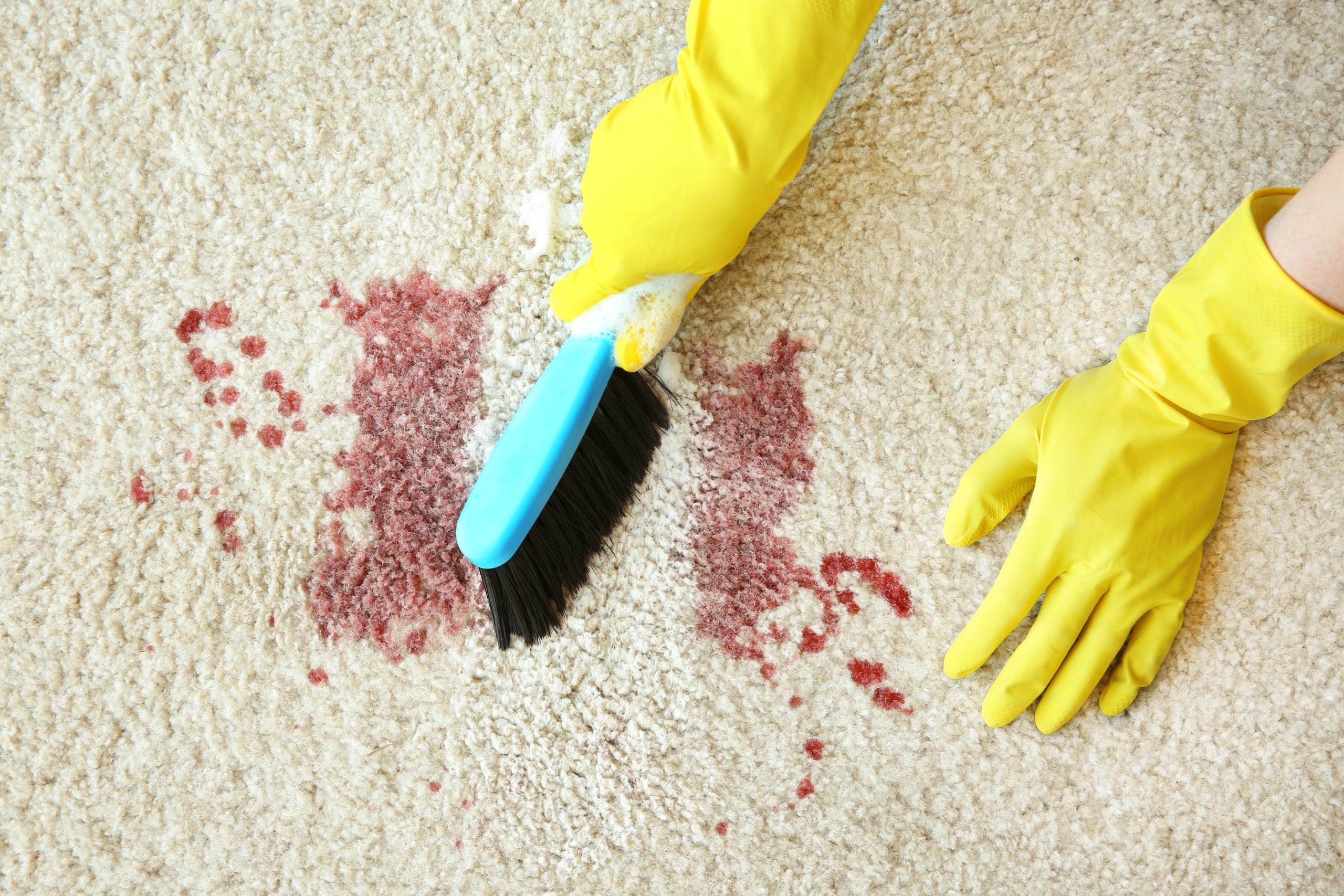
Most household stains respond to the same core toolkit: white vinegar, baking soda, hydrogen peroxide, dish soap, and enzyme-based cleaners. The difference is method sequence. Fabric, carpet, wood, and metal each absorb and bond with pigments differently, so the substrate determines how you apply these agents, not the stain itself. This guide covers removal methods for sweat, chocolate, red wine, turmeric, rust, and melted crayons across every common household surface. When these methods fall short, an Elmhurst cleaning service can handle what household products cannot.
How Stain Chemistry Determines the Right Method
Stains fall into categories based on their chemical composition, and each category responds to a different type of treatment.
Protein-based stains (sweat, blood, food residue) break down with enzyme cleaners and cold water. Heat sets protein stains permanently by denaturing the proteins and bonding them to fiber.
Tannin and dye stains (red wine, coffee, turmeric) contain pigment compounds that penetrate fiber on contact. Speed matters more than the specific product you choose. Tannins bond within minutes; curcumin (the pigment in turmeric) bonds even faster due to its deep-binding molecular structure.
Fat and oil stains (chocolate, crayons, grease) require surfactants like dish soap to emulsify the fat before water can rinse it away. Cold treatment first (freezing or chilling) makes waxy residue brittle and easier to scrape off before the chemical treatment begins.
Oxidation stains (rust, water rings on wood) involve chemical reactions between metal or moisture and a surface. These stains require acids (citric acid, oxalic acid, acetic acid) to dissolve the oxidized compound, or abrasives to physically remove it.
Understanding which category a stain belongs to prevents the most common mistake: applying heat to a protein stain or water to a grease stain before treating it properly. For a foundation in one of the most versatile cleaning agents, see how cleaning with vinegar works across multiple surfaces and stain types.
How to Remove Sweat Stains from Shirts
Sweat stains are not caused by perspiration alone. The yellow discoloration on shirt collars and underarms is a reaction between sweat, skin bacteria, and aluminum-based antiperspirant compounds. That combination bonds to fabric fibers over time, especially when shirts sit unwashed.
Prevention:
- Wear an undershirt as an absorbent barrier
- Switch to a deodorant free of aluminum compounds
- Wash shirts promptly after wearing rather than leaving them in a hamper
Method 1: White vinegar, baking soda, salt, and hydrogen peroxide paste
Combine 1 cup white vinegar (acetic acid), 1/2 cup baking soda (sodium bicarbonate), 1 tablespoon salt, and 1 tablespoon hydrogen peroxide (3% concentration). Mix into a paste. Scrub directly onto the stain with an old toothbrush. Leave overnight, then machine wash according to the garment’s care label.
Method 2: Aspirin (acetylsalicylic acid)
Dissolve 2 uncoated aspirin tablets in a small amount of cold water. Acetylsalicylic acid shares disinfecting and cleansing properties with acetic acid. Apply to the stain, scrub with a brush, soak several hours or overnight, then machine wash on the delicate cycle in cool water.
Method 3: Dish soap and hydrogen peroxide
Mix 1 part dish soap with 2 parts hydrogen peroxide (3%). Scrub the stain thoroughly, let soak for a few hours, then machine wash per care instructions.
Method 4: Salt and hot water (delicate fabrics)
Dissolve 4 tablespoons salt in 1 liter of hot water. Scrub and soak for several hours. This is the gentlest option for delicate fabrics, pillows, and bedding that cannot tolerate peroxide.
Do not use chlorinated bleach (sodium hypochlorite) on sweat stains. Bleach reacts with the aluminum and protein compounds in sweat residue and darkens the stain rather than removing it.
How to Remove Chocolate Stains
Chocolate is a fat-and-dye compound stain. The cocoa butter (fat), cocoa solids (pigment), and sugar create a multi-layer bond with fabric. Start cold: freeze or chill the fabric first to make the residue brittle, then work from there.
Clothes
Place the garment in the freezer until the chocolate hardens, then scrape off the brittle residue with a butter knife. Rinse from the back of the stained area with cold water to push the stain outward rather than deeper into the fibers. Apply a few drops of dish soap directly to the stain. Dish soap’s surfactants cut through the cocoa butter. Let sit 5 to 10 minutes, then rub gently and rinse. For any remaining pigment, apply an enzyme-based cleaner to both sides of the fabric, let sit for a few minutes, then rinse.
For denim, the process is the same but denim tolerates more aggressive scrubbing. Add a small amount of baking soda alongside the dish soap to help lift the stain from the tighter weave.
Old, set chocolate stains: Apply white vinegar directly to the stain until wet. Blot with paper towels. Mix baking soda with water into a thin paste and apply to the stained area, scrubbing gently. Launder in warm water with detergent.
Carpet
Apply a stain remover or dry cleaning solvent directly onto the stain. Blot with microfiber cloths, follow with a damp cloth, then apply cornstarch over the area. Cornstarch is highly absorbent and draws residual moisture and pigment out of carpet fibers. Leave for several minutes, brush away, then repeat until the stain is gone. For chocolate ground into high-traffic carpet, carpet cleaning with hot water extraction reaches residue trapped below the surface fibers.
Upholstery
Mix 1 teaspoon dish soap with 1/2 cup warm water. Apply to a microfiber cloth and dab (never scrub) the stain. Avoid saturating the upholstery fabric. Continue dabbing and blotting with dry paper towels until the stain lifts.
How to Remove Red Wine from Carpet
Red wine stains fast because of two compounds: tannin (the same substance used historically to make ink) and anthocyanin dyes. Both penetrate carpet fiber on contact. Speed matters more than the method you choose.
Method 1: Club soda
Blot the stain dry with a clean cloth first. Pour club soda directly over the stain, wait a few seconds, then blot again. The carbonation (dissolved carbon dioxide) mechanically loosens tannin from carpet fibers.
Method 2: Dish soap and white vinegar solution
Mix 1 tablespoon dish soap, 1 tablespoon white vinegar, and 2 cups tepid water. Blot as much wine as possible first, then apply a small amount of the solution and blot with a clean white cloth only. Colored rags can bleed dye into the carpet and compound the problem.
Method 3: Dry powder absorption
Blot the stain dry, then apply baking soda, salt, or baby powder generously over the entire stained area. Leave for several minutes to absorb pigment and moisture, then vacuum. This method works well combined with the dish soap and vinegar solution above.
Method 4: Hydrogen peroxide (3%) and dish soap
Mix 1 part dish soap with 2 parts hydrogen peroxide. Test on a small, hidden area of the carpet first; hydrogen peroxide can lighten certain carpet dyes. If no color change occurs, apply to the stain, leave for 20 to 60 minutes, then blot dry and repeat as needed.
One rule applies across all four methods: blot, never rub. Rubbing spreads the tannin and anthocyanin compounds further into the fiber and can damage the carpet pile.
How to Remove Turmeric Stains
Turmeric contains curcumin, a deep-yellow pigment that bonds to surfaces faster and more aggressively than most food dyes. Curcumin is fat-soluble and resistant to water alone, which is why standard soap-and-water treatment often fails. Act immediately on turmeric spills; once curcumin sets, it becomes one of the most stubborn household stains.
Clothes
Run cold water over the stain or soak the fabric in mild detergent for 20 minutes. Never use hot water on turmeric; heat accelerates curcumin’s bond to fiber and makes the stain permanent.
If you are away from home, apply lemon juice or a lemon slice directly to the stain for 15 minutes. The citric acid breaks down curcumin’s pigment structure. Ice cubes work as a substitute for cold water rinsing in a pinch.
Hand sanitizer containing isopropyl alcohol also breaks turmeric pigment. Dab it onto the affected area with a damp towel.
Air dry white fabrics in direct sunlight; UV exposure has natural bleaching properties that help fade residual curcumin. Dry colored clothes indoors to protect their dye.
For white fabrics that tolerate bleach, soak in a mixture of sodium hypochlorite bleach and hot water for 15 minutes. Check the care label before using bleach on any garment.
Carpet
Remove excess turmeric with a spoon or blunt edge. Blot with a damp towel. Do not scrub; scrubbing pushes curcumin deeper into carpet fiber.
Create a paste using baking soda, water, and liquid dish soap. Apply the paste to the stain for 15 minutes. Remove the paste with a cloth or spoon and blot the area with a clean towel. Repeat if yellow pigment remains.
Countertops and Dishes
For dishes, soak overnight in a solution of 1 part white vinegar (or bleach) to 2 parts hot water. Remove and wash with liquid dish soap and a non-scratch sponge. This works on glass, plastic, ceramic, and food processor bowls.
For countertops, apply a paste of baking soda and water directly to the stain for 15 minutes. Scrub gently in a circular motion. If the paste is not enough, try a vinegar or lemon juice application. Avoid using lemon juice or vinegar on marble or granite countertops; the acid etches natural stone surfaces.
Skin and Nails
Rub isopropyl alcohol (rubbing alcohol) over the stain with a cotton ball. Wash with soap and warm water.
A paste of baking soda and lemon juice exfoliates stained skin and reduces yellow pigment. For stained nails, submerge them in a bowl of citrus-scented dish soap for 10 to 15 minutes. Apply moisturizer after treatment, as these methods can dry out skin. If turmeric has stained multiple surfaces at once, a one-time deep clean covers countertops, floors, and fabrics in a single visit.
How to Remove Rust from Metal Fixtures and Surfaces
Rust is iron oxide, formed when iron or steel is exposed to moisture and oxygen. It does not spread from one metal object to another; each piece of metal rusts independently based on its own exposure to moisture. Treating rust early prevents surface pitting and structural weakening.
Household Methods for Rust Removal
Baking soda paste: Mix baking soda with water into a thick paste. Apply to all rusty areas and let sit for one hour. Scrub with steel wool or a stiff brush. Rinse and dry completely.
White vinegar soak: Submerge the rusty metal in undiluted white vinegar overnight. The acetic acid dissolves iron oxide. Scrub with steel wool or a stiff brush in the morning. Wash with dish soap and water, then dry thoroughly. For stubborn spots, soak a second night and scrub again.
Citric acid bath: Add 3 tablespoons of citric acid to a container of hot water. Submerge the rusty item overnight. Scrub and rinse in the morning. Citric acid is aggressive and can strip paint and protective coatings from metal, so use it only on bare metal or items you plan to refinish.
Lemon (or lime) and salt: Apply salt to the rusty area, then squeeze lemon or lime juice over it. Let sit for at least two hours. Scrub with the citrus rind, then use steel wool for stubborn spots. Rinse and dry. The citric acid dissolves rust while salt provides abrasive power.
Aluminum foil: Ball up a piece of aluminum foil and scrub rusty spots directly. For difficult deposits, dip the foil in cola; the phosphoric acid in carbonated cola helps break the iron oxide bond. Polish with a dry cloth.
Potato and baking soda: Cut a potato in half and press the cut surface onto the rust. Oxalic acid, naturally present in potatoes, dissolves iron oxide on contact. Add baking soda or salt to the cut surface for additional abrasive action. Scrub, rinse, and dry.
Sandpaper: Use 50 to 80 grit sandpaper for heavy surface rust. Follow with 400 grit to polish the metal and restore its appearance. Sandpaper is the most effective method for items you plan to repaint or refinish.
Commercial rust removers: Phosphoric acid-based products dissolve rust chemically. Wear gloves and eye protection; phosphoric acid is corrosive and can irritate skin and eyes on contact.
Rust Stains on Clothes
Lay the fabric on an old towel. Pour a small amount of white vinegar onto the stain. Cut a lemon in half and rub it directly on the stained area. Place the fabric in sunlight and wait for the stain to fade. Launder immediately. For non-washable fabrics, combine lemon juice and salt into a thick paste, test on an inconspicuous area first, and let sit until the stain fades. Brush away the dried salt.
Rust prevention: Keep metal fixtures dry and stored in low-humidity areas. Rust treatment coatings (available at hardware stores) create a barrier between the metal surface and moisture.
How to Get Melted Crayons Out of Clothes
Crayons are paraffin wax bound with pigment. The wax must be solidified and removed before treating the dye stain underneath.
Standard Machine Wash Method
Set your washing machine to the hottest water setting the fabric allows. Boil a pot of water separately and add it to the load along with your regular detergent. Make a solution of 1/2 cup white vinegar and 5 tablespoons dish soap. Soak the stained clothes in this solution for 15 minutes before running the wash cycle.
For front-load washers, set the machine to the sanitize cycle. Pour 1/2 cup white vinegar and 4 tablespoons dish soap directly into the drum with the clothes. Use the automatic soak cycle for 30 minutes, then add detergent and run the full cycle.
After a Dryer Accident
If crayons melted in the dryer, let the wax cool and harden completely before attempting removal. Scrape off the hardened wax with a butter knife or the edge of a credit card.
Place a white paper towel on a flat surface. Lay the stained section of fabric on top. Apply butter, cooking oil, or WD-40 to a clean white cloth and blot both sides of the affected area. (If using WD-40, spray directly onto the stain on both sides.) Wait 15 minutes and scrape excess wax.
Rub dish soap or laundry detergent into the stain with your fingers or an old toothbrush. Wait 15 minutes and wash using oxygen-based bleach (sodium percarbonate) on the heavy soil setting at the hottest water temperature the fabric allows. Check the stain before drying. If it remains, soak overnight in warm water with oxygen-based bleach and wash again in the morning.
Clean your dryer drum immediately if crayons stained the interior. Spray WD-40 on the waxy areas, wait a few minutes, and scrub with a rubber scraper. Wipe the drum clean with an old cloth. Run the dryer with old towels for 10 minutes to remove any oil residue before drying other clothes.
Car Upholstery
Apply WD-40 generously to the melted crayon area. Scrape loosened wax with a butter knife. Apply a dry cleaning solvent to a white cloth and dab the remaining stain. Air dry the seat.
Never attempt to remove melted crayons while the wax is still soft. The pigment will smear and spread across a larger area. Let it harden first, or speed up the process by placing ice cubes in a plastic bag against the wax.
How to Remove Stains from Wood Furniture and Floors
Wood stains divide into four categories by cause, each requiring a different treatment approach.
Water Stains (White Rings)
White rings form when condensation from a glass penetrates the wood’s finish layer without reaching the wood grain beneath.
- Apply non-gel toothpaste to a soft cloth. Rub onto the ring, wipe clean with a damp cloth, let dry, and apply furniture polish.
- Spread petroleum jelly directly on the ring. Leave overnight. Wipe clean in the morning.
- Make a 1:1 paste of baking soda and water. Rub in a circular motion until the ring disappears, then wipe off.
Heat Marks (White Discoloration)
Heat marks occur when high temperature disrupts the wood finish rather than the wood itself. Mix baking soda with non-gel toothpaste into a paste. Rub into the stain with a clean cloth until the surface feels slightly warm from friction. Wipe clean with a damp cloth. Repeat if needed, then finish with wood oil or furniture polish.
Dark Stains (Water Penetration into Wood Grain)
Dark stains indicate moisture has reached the wood fibers below the finish layer. Two approaches:
Sanding method: Use 100-grit sandpaper to sand the stain following the wood grain direction. Feather the edges to blend the sanded area with the surrounding surface. Apply several coats of varnish, feathering edges again, then finish with fine steel wool for a smooth surface.
Bleach method: Wearing gloves, apply bleach with a brush directly onto the stain. Let it sit for several hours until the stain fades to match the surrounding wood. Wipe off with a damp sponge, then apply white vinegar to neutralize the bleach and stop the lightening process. Let dry completely, then apply wood polish.
Pen and Marker Marks
Apply dish soap to a damp cloth and wipe over the marks. Most washable markers come off with soap alone. For permanent marker, apply isopropyl alcohol to a clean cloth (wear gloves) and rub the stain. Wash the area with a soapy cloth and dry thoroughly. Hand sanitizer with high alcohol content works as a substitute.
How to Prevent Common Household Stains
Prevention reduces the frequency and severity of stains across all surfaces.
- Treat spills immediately. Every stain covered in this guide responds better to treatment within the first few minutes. Dried stains require stronger chemicals and more effort.
- Keep a stain kit accessible. White vinegar, baking soda, dish soap, hydrogen peroxide (3%), and enzyme cleaner cover the majority of household stain emergencies.
- Wear protective clothing when cooking with turmeric. An apron and gloves prevent the most stubborn food-pigment stain from reaching fabric.
- Prepare work surfaces. Use glass or stainless steel cutting boards when handling stain-prone spices. Porous surfaces like wood absorb pigment within seconds.
- Check pockets before running laundry. Crayons, pens, and other items that survive a wash cycle cause stains that affect every garment in the load plus the machine interior.
- Dry metal fixtures after use. Rust forms only when iron or steel is exposed to moisture. Keeping fixtures dry eliminates the primary cause.
- Use coasters and trivets on wood. Water rings and heat marks on wood furniture are entirely preventable with a barrier between the object and the finish.
When DIY Stain Removal Is Not Enough
Professional cleaning is the right call when a stain has fully set and multiple treatment attempts have not moved it.
Specific triggers:
- A carpet stain where liquid has soaked through to the padding beneath. Surface treatment cannot reach the source, and the padding will continue releasing the stain back upward.
- A wood stain that has penetrated through the finish layer and requires sanding and refinishing rather than surface treatment.
- Upholstery with restrictive fabric care codes: W-only (water-based cleaners only), S-only (solvent-based cleaners only), or X-only (vacuum only, no liquids).
- Persistent rust on metal fixtures where surface pitting has begun and the item needs professional descaling or replacement.
- Any stain that has been treated correctly and promptly two or three times with the right chemistry and remains visible. At that point, the stain has either bonded permanently to the substrate or the substrate itself has been damaged.
Contact us to describe the stain type and surface, and we will tell you directly whether another DIY attempt is worth it or whether it is time to bring in a professional.
