
Dirty floors do more than look bad. They hold allergens, bacteria, and grit that shorten the lifespan of your flooring and reduce indoor air quality. The problem is that hardwood, tile, linoleum, vinyl, laminate, and carpet all respond differently to water, heat, and cleaning agents. Using the wrong method on the wrong surface can cause warping, discoloration, or voided warranties.
This guide covers the correct cleaning process for every major residential floor type, including which tools to use, which products to avoid, and how often each surface needs attention. If you would rather hand the job to trained technicians, Helping Hands Cleaning Services provides floor care across Elmhurst, Glen Ellyn, Wheaton, and the surrounding western suburbs of Chicago.
How to Clean Hardwood Floors Without Causing Damage
Hardwood floors are a long-term investment. Solid oak, maple, and walnut planks can last generations when maintained correctly. The biggest threat is moisture. Water that sits on hardwood seeps between boards, swells the wood fibers, and leads to cupping, crowning, or permanent warping.
Daily care: Sweep or vacuum with a soft-bristle attachment to remove sand, grit, and pet hair before they scratch the finish. A consistent daily routine keeps surface debris from grinding into the polyurethane layer with foot traffic.
Weekly mopping: Use a flat microfiber mop dampened (not soaked) with warm water and a pH-neutral hardwood floor cleaner. Spray the solution lightly onto the floor rather than pouring water from a bucket. Wipe in the direction of the wood grain. Dry each section with a clean cloth immediately after mopping.
What to avoid: Ammonia-based products, vinegar, and steam cleaners. Ammonia strips the finish over time. Vinegar is mildly acidic and dulls polyurethane coatings. Steam introduces moisture vapor that penetrates hairline cracks between boards, even on sealed floors.
Stain treatment: For scuff marks, rub gently with a tennis ball or a felt pad dipped in your cleaning solution. Food or beverage stains should be wiped up immediately with a damp microfiber cloth. If you are dealing with tough household stains, address them quickly before they set into the grain.
Refinishing note: If your hardwood floors look dull even after proper cleaning, the finish may be worn. A professional screen-and-recoat can restore the sheen without a full sand-and-refinish job.
How to Clean Linoleum Floors and Make Them Last
Linoleum is one of the oldest resilient flooring options in American homes. Made from linseed oil, pine resin, cork dust, and wood flour, it is naturally antibacterial, hypoallergenic, and biodegradable. The pigments run through the entire thickness of the material, which means minor scratches are less visible and the surface is effectively self-healing.
The only real vulnerability is standing water. Prolonged moisture causes warping, loosens seams, and leads to discoloration around the edges.
Sweep first, mop second: Remove dust, crumbs, and debris with a broom or vacuum before any wet cleaning. This prevents particles from scratching the surface during mopping.
Cleaning solution: Mix 6 to 8 drops of dish soap into one gallon of hot water. Dip a microfiber mop, wring it thoroughly so the mop is damp rather than dripping, and work in sections. Rinse the mop between sections to avoid spreading dirty water. After mopping with soap, go over the entire floor again with clean hot water to remove residue. Dry thoroughly with old towels.
Natural alternatives: A cup of white vinegar or apple cider vinegar in a gallon of water works well as a cleaning and disinfecting solution. For added scent, substitute lemon juice. Sprinkle baking soda on stubborn spots before mopping for gentle abrasion without scratching.
Homemade polish: Combine one cup of vinegar and two tablespoons of baby oil in five gallons of water. Mop as usual. The vinegar cleans while the baby oil leaves a subtle shine. Do not exceed two tablespoons of oil, or the floor will feel greasy. Buff with a dry cloth after mopping.
Deep cleaning frequency: High-traffic commercial spaces need deep cleaning weekly. Residential floors typically need a thorough deep clean once a month, with daily sweeping and spot mopping in between.
Stubborn buildup: Use an old toothbrush or scrub brush for caked-on gunk. A putty knife can carefully lift adhesive residue or dried spills that scrubbing alone cannot remove.
Is Steam Cleaning Safe for Wood and Laminate Floors?
Steam cleaners are marketed as chemical-free, eco-friendly tools that kill 99.9% of bacteria. On tile and sealed concrete, they deliver. On wood and laminate, the reality is more complicated.
The moisture problem: Wood is a naturally absorbent material. Steam is thinner than liquid water and penetrates hairline cracks, board edges, and unsealed joints far more easily. As the vapor cools and condenses, it leaves behind trapped moisture that swells wood fibers from the inside. Over time, this causes warping, cupping, and mold growth beneath the surface.
Engineered hardwood risk: Engineered floors have a thin real-wood veneer glued to a filler substrate. The wear layer protects the top surface, but the sides and bottom of each plank are exposed. Steam can compromise the adhesives bonding the layers together, leading to delamination. The North American Laminate Flooring Association (NALFA) explicitly advises against steam cleaning on laminate products.
Warranty concerns: Most hardwood and laminate floor warranties include specific exclusions for steam cleaning. Using a steam mop, even briefly, can void your coverage. Check your manufacturer’s care guide before using any steam device.
When steam works: Ceramic tile, porcelain tile, and sealed stone floors are good candidates for steam cleaning. The non-porous surface prevents moisture from penetrating, and the heat effectively loosens grout grime. If you choose to steam clean tile, use the lowest effective heat setting and keep the mop moving rather than holding it in one spot.
Better alternatives for wood: Stick with a damp microfiber mop and a pH-neutral cleaner formulated for your specific floor type. If you need a deeper sanitizing treatment, professional disinfecting services use methods that are safe for all floor types.
How to Clean Ceramic and Porcelain Tile Floors

Cleaning Ceramic-Porcelain-Marble-Floors
Tile floors are built for kitchens, bathrooms, laundry rooms, and entryways because they resist water, scratches, and heavy foot traffic. Ceramic and porcelain tiles differ in density (porcelain is fired at higher temperatures and absorbs less water), but the cleaning process is nearly identical.
Weekly sweeping: Use a soft-bristle broom or vacuum with a hard-floor setting. Sand and grit tracked in from outside act like sandpaper under shoes, dulling the tile glaze over time. Consistent sweeping is the simplest way to preserve that factory shine.
Mopping solution: Mix two to three drops of mild dish soap or Castile soap into half a gallon of warm water. Mop in overlapping passes to avoid missing spots. Change the water frequently so you are not pushing dirty water back across the clean surface. This same solution works on both ceramic and porcelain.
Stain removal: Coffee, juice, and grease stains respond well to hydrogen peroxide or club soda applied directly to the spot. Let it sit for a few minutes, then blot and rinse with clean water. For more stubborn kitchen messes, check out these kitchen cleaning strategies.
Grout maintenance: Grout is porous and absorbs spills, eventually turning dingy even when tiles look clean. Use a grout-specific cleaner, spray it on, let it sit for the recommended time, and scrub with a stiff brush. After rinsing, apply a grout sealant to protect against future staining. Resealing every 12 to 18 months keeps grout lines looking fresh.
Dry mopping: After wet mopping, run a clean dry cloth over the surface to eliminate water spots. Hard-water mineral deposits leave a white haze on tile. On ceramic and porcelain, a small amount of lemon juice or vinegar removes mineral buildup. However, never use acidic solutions on natural stone tiles.
How to Clean Marble Floors Without Etching the Surface
Marble is a calcium-based natural stone. It reacts with acids, which means vinegar, lemon juice, bleach, ammonia, and most conventional bathroom cleaners will etch the polished surface, leaving dull spots that require professional honing to remove.
Sweeping: Use a soft dust mop or a broom with natural bristles. Abrasive bristles and beater-bar vacuums can scratch polished marble.
Mopping: Fill a bucket with warm distilled water and add two to three drops of pH-neutral soap. Dip a microfiber mop, wring thoroughly, and mop in gentle passes. Because marble is porous, minimize the amount of liquid on the surface and dry immediately after mopping.
Spill response: Marble absorbs liquids quickly. Wine, coffee, and citrus juice must be blotted immediately with a dry microfiber cloth. Do not wipe, as that spreads the liquid into a larger area.
Scuff removal: Dampen a felt pad with your pH-neutral solution and gently rub along the stone’s grain. Avoid abrasive scrubbing pads that can scratch the polished finish.
Sealing: Marble should be sealed after installation and resealed annually. A quality impregnating sealer fills the stone’s pores and reduces staining without altering the appearance. Between professional sealings, regular cleaning and fast spill response are your best protection.
Professional care: If your marble floors have lost their polish or developed etch marks, professional stone restoration is the proper solution rather than DIY acid treatments. For routine floor maintenance across multiple surfaces, recurring cleaning services keep every room consistent.
How to Clean Vinyl, Laminate, and Bamboo Floors
These three flooring types share a common weakness: excessive moisture. Each requires a slightly different approach, but the principle is the same. Keep them dry, clean them gently, and avoid harsh chemicals.
Vinyl Floor Care
Vinyl is water-resistant (not waterproof at the seams) and handles daily wear well. Sweep or vacuum regularly to remove grit. Mop with a solution made specifically for vinyl floors, or use warm water with a few drops of dish soap. Avoid abrasive scrubbers that can scuff the wear layer.
Vinyl can yellow or discolor from prolonged UV exposure. If your vinyl floors are near large windows, consider window treatments to limit direct sunlight. Using the wrong cleaning product is another common cause of discoloration. Stick to products designed for vinyl and skip the bleach. To explore eco-friendly cleaning options, plant-based cleaners are a solid vinyl-safe choice.
Laminate Floor Care
Laminate is a photograph of wood laminated onto a fiberboard core. Water is its worst enemy. Never wet-mop laminate with a soaking mop or use a steam cleaner. Instead, use a microfiber dust mop daily and a slightly damp mop with a laminate-specific cleaner for periodic deeper cleaning.
Laminate scratches easily. Place felt pads under furniture legs, avoid dragging heavy items, and skip abrasive cleaning products. If you notice persistent scuffs, a melamine foam sponge (used gently) can often remove them without damaging the surface. Having the right cleaning tools makes a real difference in protecting these floors.
Bamboo Floor Care
Bamboo is a grass, not a hardwood, but it behaves similarly. Standard bamboo scratches more easily than oak; strand-woven bamboo is the exception, offering hardness comparable to Brazilian cherry.
Mix a quarter cup of pH-neutral soap into a bucket of water. Use a lightly dampened mop and follow up immediately with a dry microfiber towel to absorb residual moisture. Sweep daily to prevent grit from embedding in the finish. Bamboo is an investment, and gentle, consistent care protects that investment.
How to Clean Carpet Floors and Remove Stains
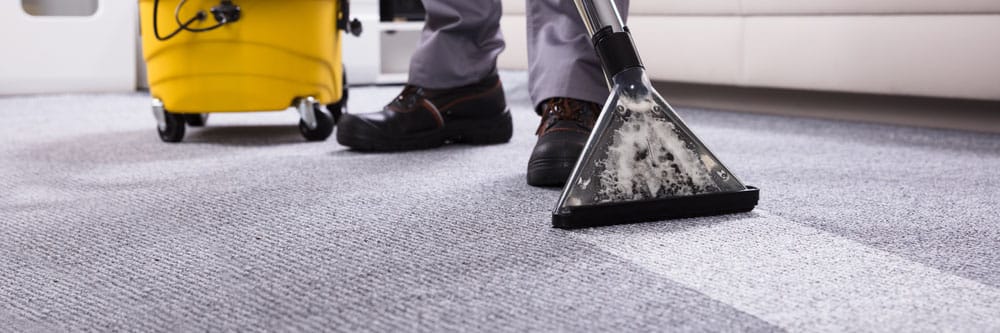
Male Janitor Cleaning Carpet With Vacuum Cleaning In The Living Room
Carpet traps dust, pet dander, pollen, and bacteria deep in its fibers, making regular maintenance critical for both appearance and indoor air quality. Unlike hard surfaces, carpet cannot simply be mopped.
Vacuuming: Vacuum high-traffic areas two to three times per week and the rest of the house at least once per week. Use a vacuum with a HEPA filter to capture fine allergens rather than recirculating them into the air. Empty the canister or replace bags before they are completely full to maintain suction.
Spot cleaning: Blot spills immediately with a clean white cloth, working from the outside of the stain inward to prevent spreading. Avoid rubbing, which pushes the stain deeper into the carpet pad. For common household stains, a mix of dish soap and warm water handles most fresh spills. Hydrogen peroxide is effective on organic stains like coffee and wine (test on a hidden area first).
Deep cleaning: Professional carpet cleaning using hot-water extraction (often called steam cleaning, though it uses pressurized hot water rather than actual steam) should be done every 12 to 18 months. This process reaches contaminants that vacuuming alone cannot remove.
Prevention: Avoid eating and drinking on carpeted areas when possible. Place doormats at every entrance to reduce the amount of soil tracked onto carpet. Remove shoes at the door to minimize grit.
How to Clean Brick and Concrete Floors
Both brick and concrete are porous, which means they absorb spills and harbor dirt more readily than glazed tile or sealed hardwood.
Brick Floors
Vacuum first to remove loose debris, then mop with warm water. Avoid harsh soaps, acids, and abrasive scrubbers, as these damage the porous surface and strip sealant. For a natural brightener, mix equal parts white vinegar and water (brick can handle mild acidity, unlike marble). Apply a water-based or solvent-based brick sealer to create a protective barrier that simplifies future cleaning.
Concrete Floors
Sweep or dust-mop daily. For weekly cleaning, use warm water mixed with one to two teaspoons of mild dish soap or Castile soap. Oil-based stains require spot treatment: wet the area, apply dish soap, scrub with a stiff brush, blot the suds, and rinse with clean water.
After cleaning, a microfiber wax application protects concrete against dirt buildup, staining, and surface abrasion. Sealed concrete is significantly easier to maintain than unsealed. If you are preparing a space for new occupants, move-out cleaning services cover concrete garage and basement floors as part of a full property turnover.
Floor Cleaning Tips That Apply to Every Surface
Regardless of your floor type, a few universal principles protect your investment and reduce cleaning time:
- Sweep or vacuum before mopping. Wet-mopping over loose grit grinds particles into the finish. Always dry-clean first.
- Use the right cleaner. pH-neutral products are safe for most surfaces. Acidic cleaners (vinegar, lemon) damage marble, limestone, and travertine. Alkaline cleaners (ammonia, bleach) dull hardwood and linoleum finishes. When in doubt, check the manufacturer’s care guide.
- Wring your mop thoroughly. A damp mop cleans. A wet mop damages. This applies to every floor type except outdoor concrete.
- Dry the floor after mopping. Standing water causes problems on hardwood, linoleum, laminate, bamboo, and even grout lines in tile.
- Address spills immediately. The longer a spill sits, the deeper it penetrates porous surfaces.
- Set a cleaning schedule. Sweeping daily and mopping weekly prevents buildup that requires aggressive cleaning later. If you are unsure how frequently your home needs professional attention, this guide on how often to schedule house cleaning breaks it down by household size and lifestyle.
- Protect high-traffic zones. Area rugs, doormats, and furniture pads reduce wear on all floor types. For a comprehensive approach, a spring cleaning checklist can help you tackle seasonal floor maintenance room by room.
Frequently Asked Questions About Floor Cleaning
What is the best homemade floor cleaner for most surfaces?
A few drops of pH-neutral dish soap in warm water is the safest general-purpose floor cleaner. It works on tile, vinyl, linoleum, sealed concrete, and brick. For hardwood, use a product formulated specifically for wood finishes. For marble and natural stone, stick to pH-neutral stone cleaners only.
Can I use vinegar to clean all types of floors?
No. Vinegar is safe for linoleum, vinyl, ceramic tile, porcelain tile, sealed concrete, and brick. It should never be used on marble, travertine, limestone, or other calcium-based natural stones, as the acid etches and dulls the surface. It also degrades polyurethane finishes on hardwood over time.
How often should I deep clean my floors?
Most residential floors benefit from a deep clean every four to six weeks. High-traffic areas like kitchens and entryways may need attention more frequently. Carpet should be professionally extracted every 12 to 18 months. If keeping up with floor maintenance feels overwhelming, scheduling a one-time deep clean can reset every room at once.
Is it better to mop with hot or cold water?
Warm to hot water dissolves grease and loosens dirt more effectively than cold water. However, extremely hot water can damage certain finishes and is unnecessary for routine cleaning. Aim for comfortably warm water.
Should I hire a professional or clean my floors myself?
For routine sweeping and mopping, most homeowners handle it well. Professional cleaning is worth it for deep carpet extraction, grout restoration, marble polishing, and whole-house floor care when time is limited. If you are weighing the options, this breakdown of DIY versus professional cleaning can help you decide.
Trust Your Floors to Helping Hands Cleaning Services
Every floor type in your home deserves the right care. Whether you need weekly maintenance, a seasonal deep clean, or help preparing a property for new tenants, Helping Hands Cleaning Services has the experience and equipment to handle it properly.
We serve homeowners across Elmhurst, Glen Ellyn, Wheaton, Naperville, Hinsdale, Lombard, Oak Brook, Schaumburg, and the surrounding service areas in the western suburbs of Chicago.
Request a free cleaning estimate or call us at (630) 530-1324 to set up a schedule that fits your home and your budget.
